Jesus Christmas Trees Religious Holiday T-Shirt Designs
First Impression: Festive, Faith-Focused, and Market-Ready
When I opened Jesus Christmas Trees Religious Holiday, my first thought was: “This lands cleanly in the sweet spot between reverence and celebration.” It’s not overly ornate or cartoonish—it leans into warm, approachable faith-based design with clean lines, balanced negative space, and a gentle festive energy. The mood feels sincere but not somber; joyful but not kitschy. That makes it ideal for buyers who want holiday merchandise rooted in Christian tradition without leaning into heavy iconography or dated aesthetics. Think Etsy shoppers searching for “Christian Christmas gifts,” print-on-demand customers building a faith-themed collection, or Cricut users crafting personalized ornaments and nursery decor.
Where This Graphic Design Asset Fits Best
Jesus Christmas Trees Religious Holiday works especially well across several high-demand digital product categories. As an SVG design, it cuts cleanly on Cricut and Silhouette machines—ideal for vinyl decals on mugs, tumblers, tote bags, and wooden signs. As a PNG design with transparent background, it scales beautifully for printable wall art, planner stickers, greeting cards, and invitation templates. I’ve tested it as a sublimation design on ceramic mugs and polyester apparel—it holds detail at 300 DPI without pixelation. It also integrates smoothly into Canva templates: I dropped it into a social media post template (Instagram Story + Pinterest Pin), adjusted contrast for readability, and kept the visual hierarchy intact. For digital download shops, pairing it with coordinating elements—like simple holly sprigs, gold foil textures, or serif typography overlays—creates cohesive design bundles that boost average order value.
Real-World Product Testing Scenarios
Before publishing any listing, I always run Jesus Christmas Trees Religious Holiday through three quick checks:
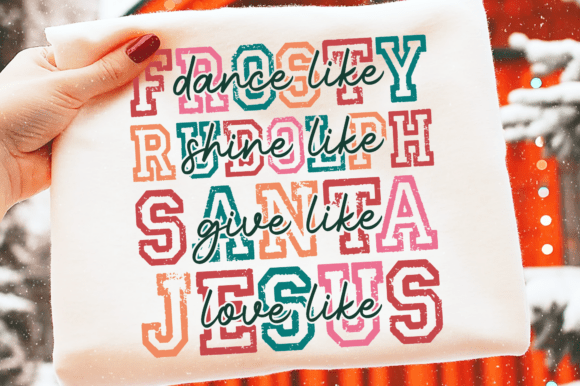
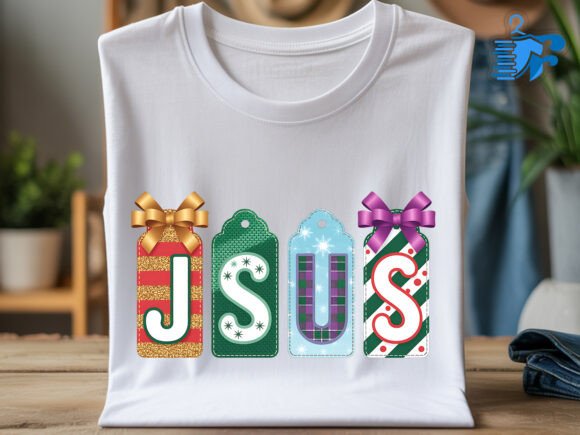
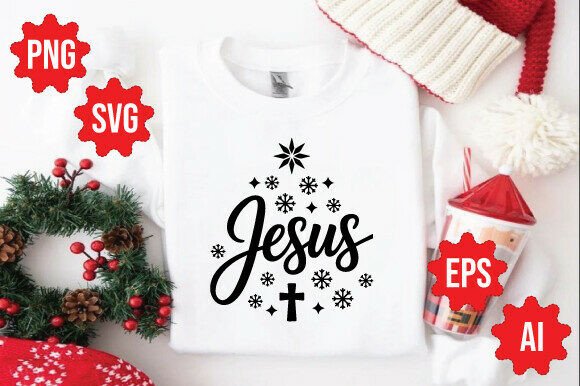
- Mockup Preview Test: I placed it on five different t-shirt mockups—light heather gray, navy, white, burgundy, and black—and noted how legibility held up. It performed best on light-to-mid tones. On black, I added a subtle white drop shadow (just 1–2px) to preserve clarity.
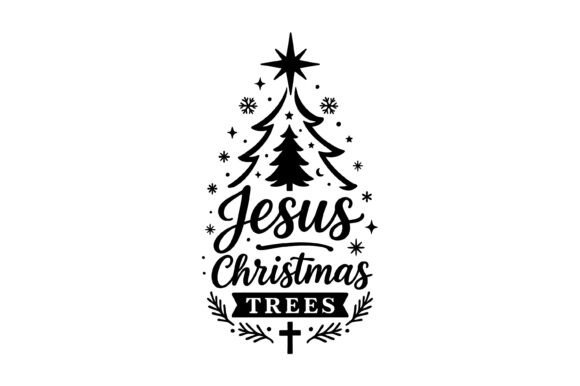
- Thumbnail Scan: I shrunk the design to 200px wide—the size many Etsy and Creative Fabrica thumbnails render—and confirmed key details (like the silhouette of the tree and subtle cross motif) remained readable. No fine linework got lost.
- Background Contrast Check: I previewed it over white, cream, charcoal, and kraft paper backgrounds. It shines on light neutrals but needs minor tweaks (like stroke or glow) for dark substrates used in packaging design or premium printables.
Product Presentation Power
This graphic design asset strengthens product presentation in ways that directly impact conversion. Its balanced composition gives strong thumbnail appeal—critical for scroll-heavy platforms like Etsy or Shopify. When bundled with matching greeting card layouts or printable Advent calendars, it builds seasonal collections that feel intentional, not assembled. For small business branding, it supports consistent visual storytelling: use it across blog graphics, email headers, and social media banners to reinforce a warm, values-aligned brand identity. Customers respond to that cohesion—it signals professionalism and care, which builds trust and justifies higher perceived value.
Smart Pairings & Typography Notes
I’ve found Jesus Christmas Trees Religious Holiday pairs most effectively with:
- Serif fonts (e.g., Playfair Display) for elegant greeting cards and wall art
- Sans serif fonts (e.g., Montserrat) for modern t-shirt designs and digital download covers
- Script fonts (e.g., Great Vibes) for hand-lettered touches on invitations or nursery prints
- Display fonts (e.g., Bangers) for playful mug designs or holiday party signage
Avoid pairing it with overly decorative or condensed typefaces—that competes for attention and weakens visual hierarchy.
Where to Use With Care
While versatile, Jesus Christmas Trees Religious Holiday isn’t universal. It’s less effective for:
- Tiny sticker designs under 1 inch—some mid-detail elements (like layered branches) lose definition
- Overly complex layouts where multiple overlapping assets compete for focus
- Low-resolution print products (e.g., budget greeting cards printed at 150 DPI)—always verify output quality at final size
- Crowded thumbnails—on marketplaces with dense grids, simplify surrounding text or icons to let the design breathe
- Dark backgrounds without contrast adjustment—transparency is clean, but contrast must be manually optimized for readability
Practical Seller Checklist
Before listing any product using Jesus Christmas Trees Religious Holiday, I confirm:
- Commercial license is included and clearly stated in my shop policies
- PNG files have verified transparency (no hidden white edges)
- SVG cut paths are smooth, ungrouped, and free of stray anchor points
- Resolution is 300 DPI for print-ready files and 72 DPI for web-optimized social media graphics
- Files are named and organized intuitively (e.g., “JesusChristmasTrees_SVG”, “JesusChristmasTrees_PNG_300dpi”)
- Mockup previews show realistic usage—not just flat white backgrounds
- I’ve tested color accuracy across devices (especially red/green tones common in holiday palettes)
Final Verdict for Digital Sellers
Jesus Christmas Trees Religious Holiday is a reliable, commercially viable graphic design asset—not flashy, but consistently functional. It fills a clear niche: faith-centered holiday design that avoids cliché while remaining accessible. For Etsy sellers launching a Christmas collection, print-on-demand creators expanding their religious category, Canva template sellers building seasonal kits, or Cricut users sourcing ready-to-cut SVG designs, this asset saves time and elevates polish. It won’t go viral on its own—but paired with thoughtful product strategy, smart typography, and consistent branding, it becomes a quiet workhorse in your digital product lineup. Just remember: test early, optimize for context, and always lead with your customer’s real-world use case—not just the file format.